Some mornings at Insimbi are a little different from others. This was one of those mornings. At 5:30, our team was already getting ready for a very special, and somewhat emotional, day. It was time for Jack to begin a new chapter.
Jack has been part of the Insimbi family since he was born in 2015, and moving him was never going to be an easy goodbye. But sometimes, doing what is best for conservation means making difficult decisions.
The morning of the translocation
Our helicopter pilot, whom we trust immensely with the safety of our rhinos, our team and the veterinary professionals who fly with him, was ready for the morning. Alongside him were our vet, the people assisting with and overseeing the operation, and our Insimbi team. Our Anti-Poaching Unit (APU) was also on hand to assist.
Cas, who has been a long-term researcher at Insimbi, and Ryan, who spent some time volunteering with us all the way from Australia, were also part of the day. We were also joined by a familiar and much-loved face, Joan, who came back to volunteer with us once again.
As soon as our vet arrived, everyone came together to discuss the plan for the morning. Once the team had been briefed and everyone knew their role, we were ready to head into the field.
At 6:40, the ground team set off to their allocated meeting point. The plan was for them to wait while the helicopter, with our vet and Carmela on board, located Jack from the air.
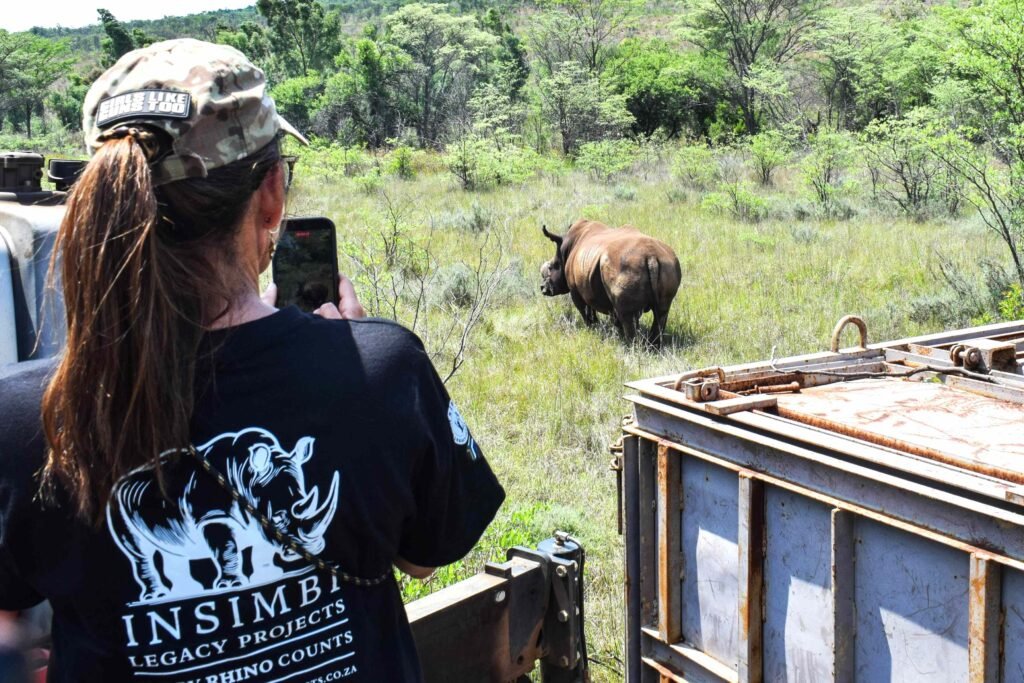
Jack had been wandering quite a bit lately, so his tracking collar gave us a general idea of where he might be. However, we still needed to find him in the right spot before anything could happen.
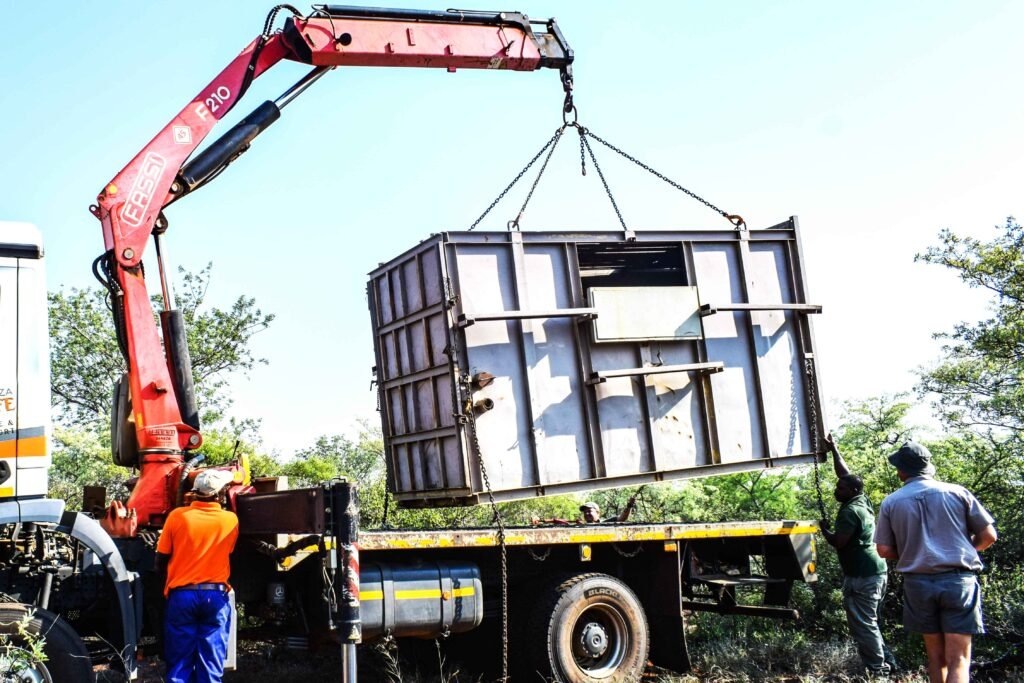
The ground team met up with the truck carrying the large steel transport crate. While everyone waited together, the radio crackled with the news we had been waiting for.
The dart was in at 7:26!
The team quickly got moving towards the point where the helicopter had landed. There was just one small problem: the ground team was on the opposite side of a fence, and there simply wasn’t enough time to drive around. A section of the fence had to be opened up to allow the large truck through.
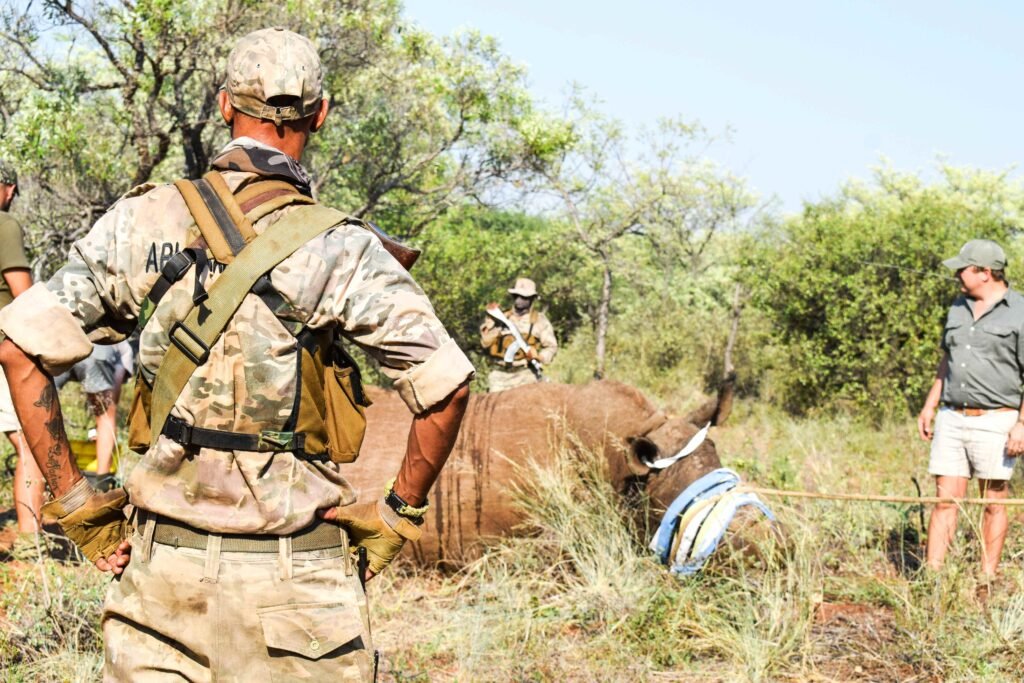
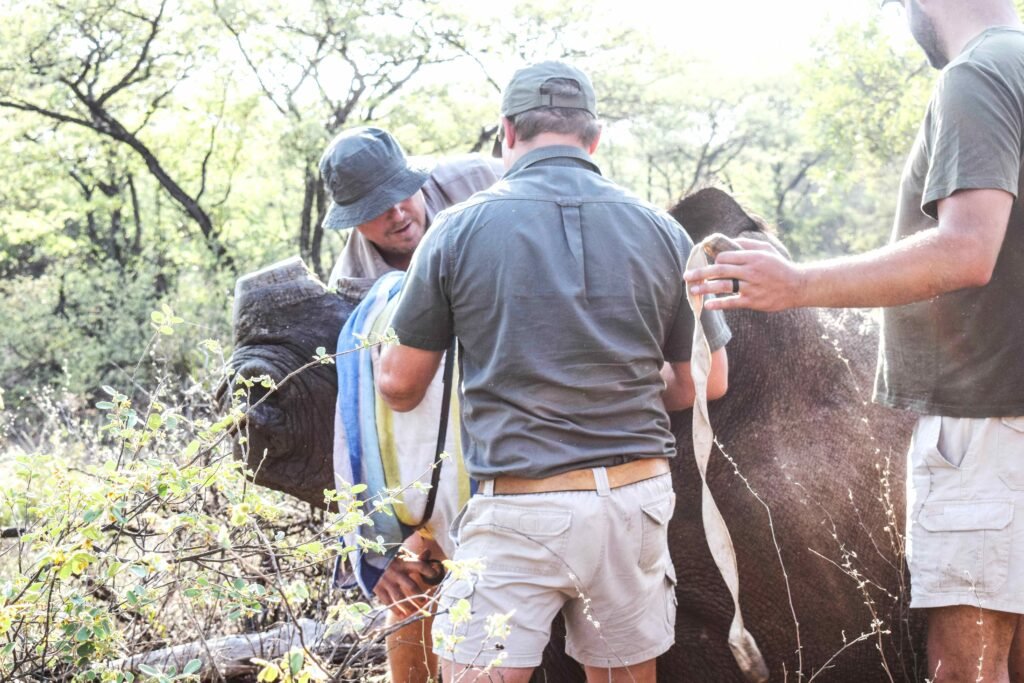
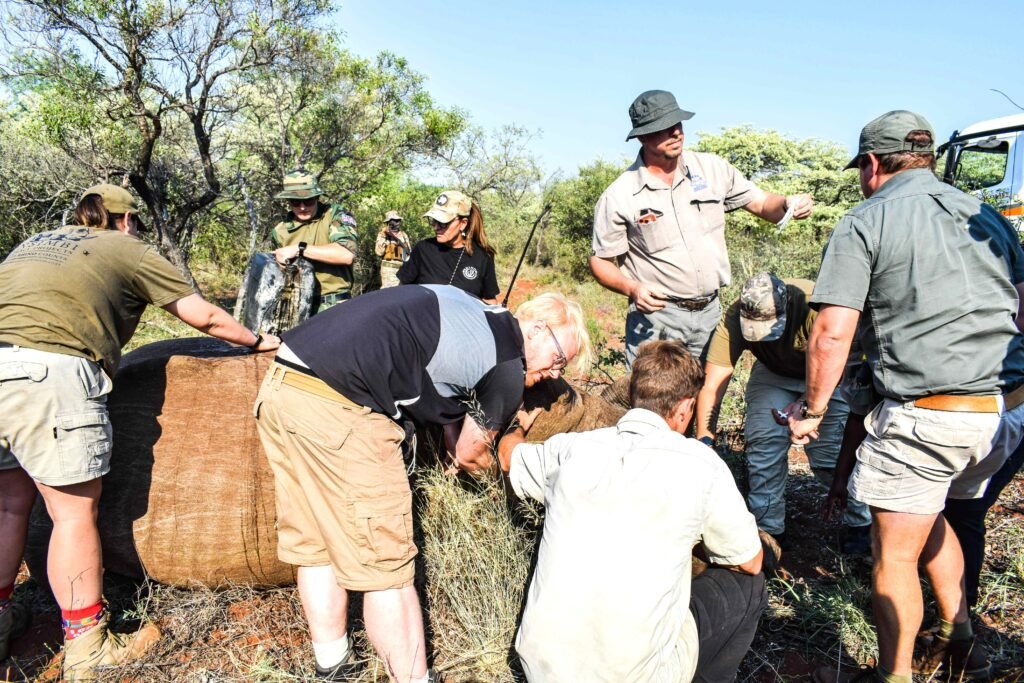
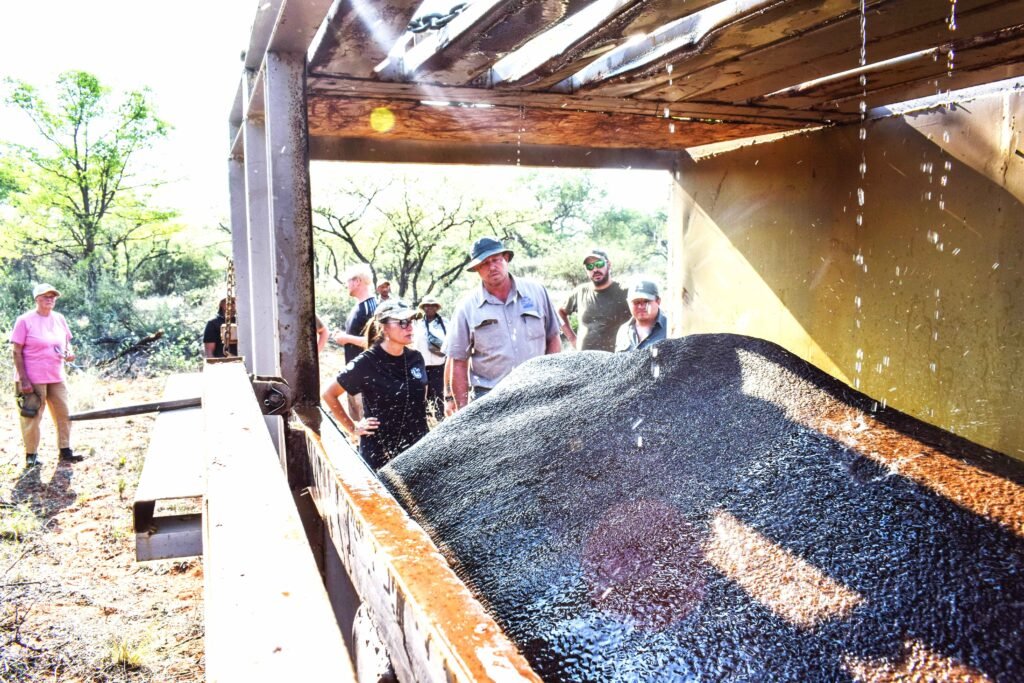
Once through, everyone rushed to Jack’s side. The ground team had an important role to play, assisting with the removal of his tracking collar, bringing equipment and helping to keep him cool by pouring water over him.
As Jack went down, our vet, Carmela (his very own Insimbi mom), and our trusted pilot were right there with him.
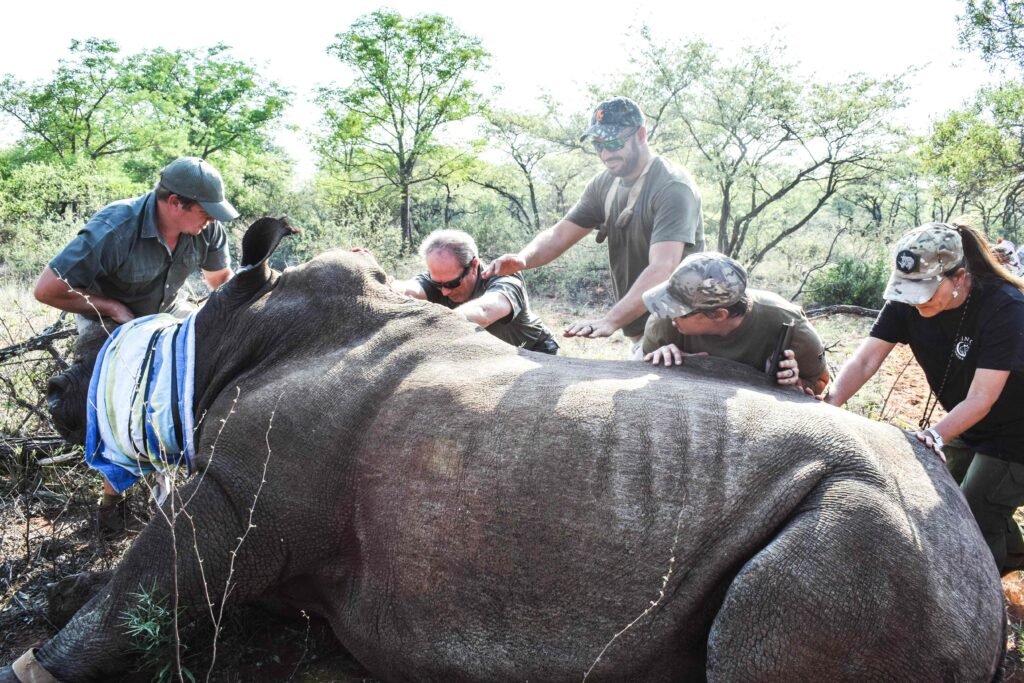
With the necessary checks completed, his collar removed, his microchip checked and all the important information recorded, it was time for the next part of the operation.
All hands on deck
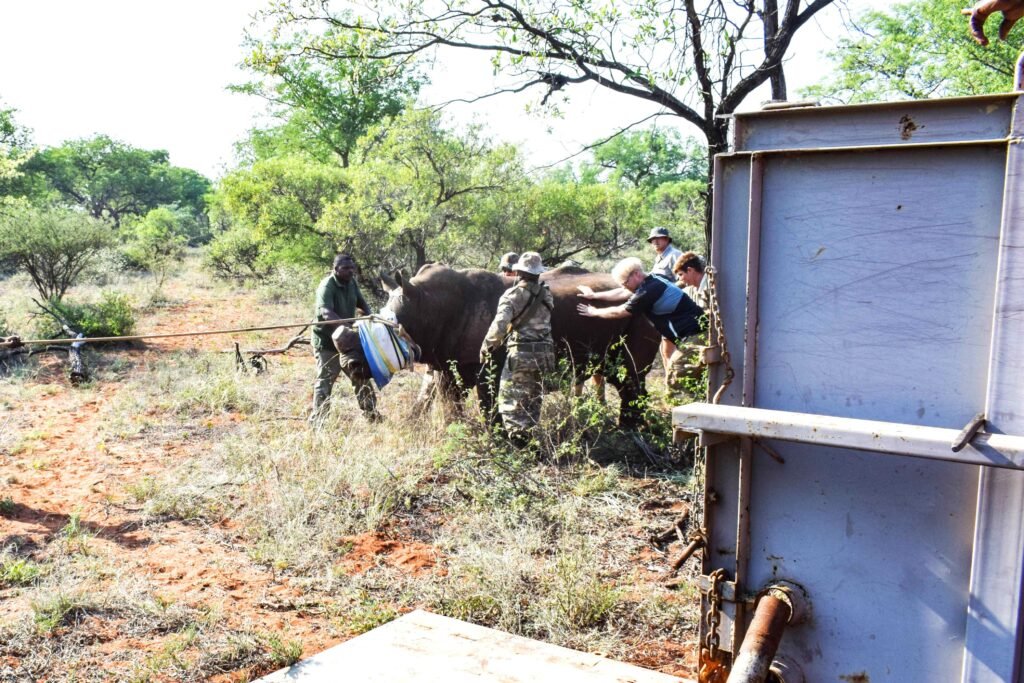
The transport crate was offloaded from the truck, and our team got to work clearing away trees and branches to create a safe, open path for Jack to walk into his new transport home.
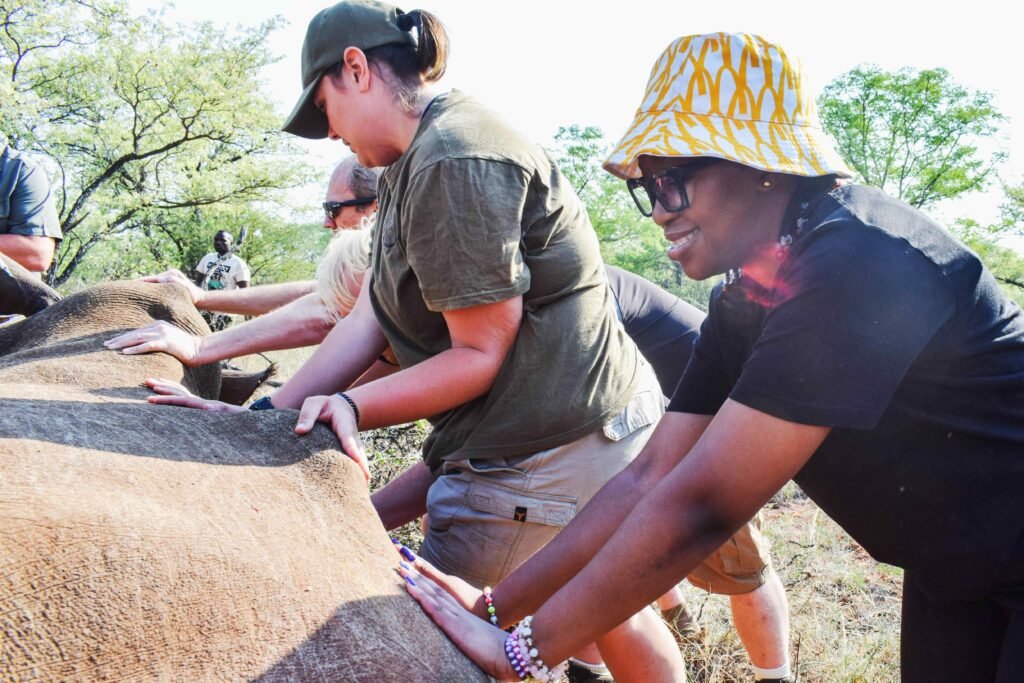
With his eyes covered and our team’s hands guiding him, Jack was carefully encouraged to get to his feet. With a little assistance, he rose, and everyone worked together to guide him towards the crate.
This is no easy task. It takes teamwork, patience and everyone knowing exactly what they need to do. Every hand matters.
The team carefully guided him into the crate, continuing to pour water over him to help keep him cool in the heat. Once he was safely inside, the door was closed, and everyone stepped back while the driver prepared to load the crate onto the truck.
And this was probably one of the hardest moments for many of us.
Jack was still on the property, but we knew it wouldn’t be long before that truck drove away.
A little boy who grew up at Insimbi
Jack isn’t just another rhino to us. He has crawled into so many of our hearts over the years.
Born in 2015 to Raphele and Insimbi, Jack was always a big softie. For many years, he was affectionately known as Baby Jack because he was such a momma’s boy. Even after his mom had another calf, he would still give out that familiar little baby-calf cry.
He has always had a gentle side to him, and watching him grow from that little calf into the bull he is today has been something special.
It is because of this that saying goodbye is particularly difficult. But Jack’s move is about giving him an opportunity to contribute to something much bigger.
A new home and a new purpose
After being loaded, a few members of our team travelled behind the truck for the journey to his new home, which was a few hours away.
We were welcomed by a very happy new owner, and once the crate was safely offloaded, it was time to wake Jack up.
With our team watching from the top of the truck, Jack slowly began to come around. He took his time waking up fully – clearly not much of a morning rhino! But eventually, he found his feet and slowly walked off into the distance.
It was quite something to watch. Almost like a scene from a movie.
At his new home, Jack will have a group of females of his own. This is incredibly important for rhino conservation and for diversifying the gene pool.
As Carmela put it, we hope he has lots of little Jacks in the future!
Jack will be carrying a little piece of Insimbi with him, continuing the legacy of his father, Insimbi, while also creating a legacy of his own.
Until we meet again, Jack.
As much as we wish we could keep every rhino close to us, we know that sometimes the best thing we can do for them is to let them go and give them the opportunity to thrive elsewhere.
We are incredibly grateful to everyone who has loved Jack during his time at Insimbi. To his adopters over the years, thank you for being part of his journey. To our staff who have cared for, monitored and protected him, thank you for all the time and dedication you have given him.
And to everyone who has followed his story, watched him grow and cheered him on along the way, thank you.
Jack will always be part of the Insimbi family. While this chapter has come to an end, a new one is just beginning.
We wish you all the very best, our Baby Jack. May your new home be everything we hope it will be. 🦏❤️